Dakar
Dakar
Dakar, at the western tip of Africa, blends historic medina, vibrant markets, the memory of Gorée and a world-renowned art scene. A dense, lively capital overlooking the Atlantic.
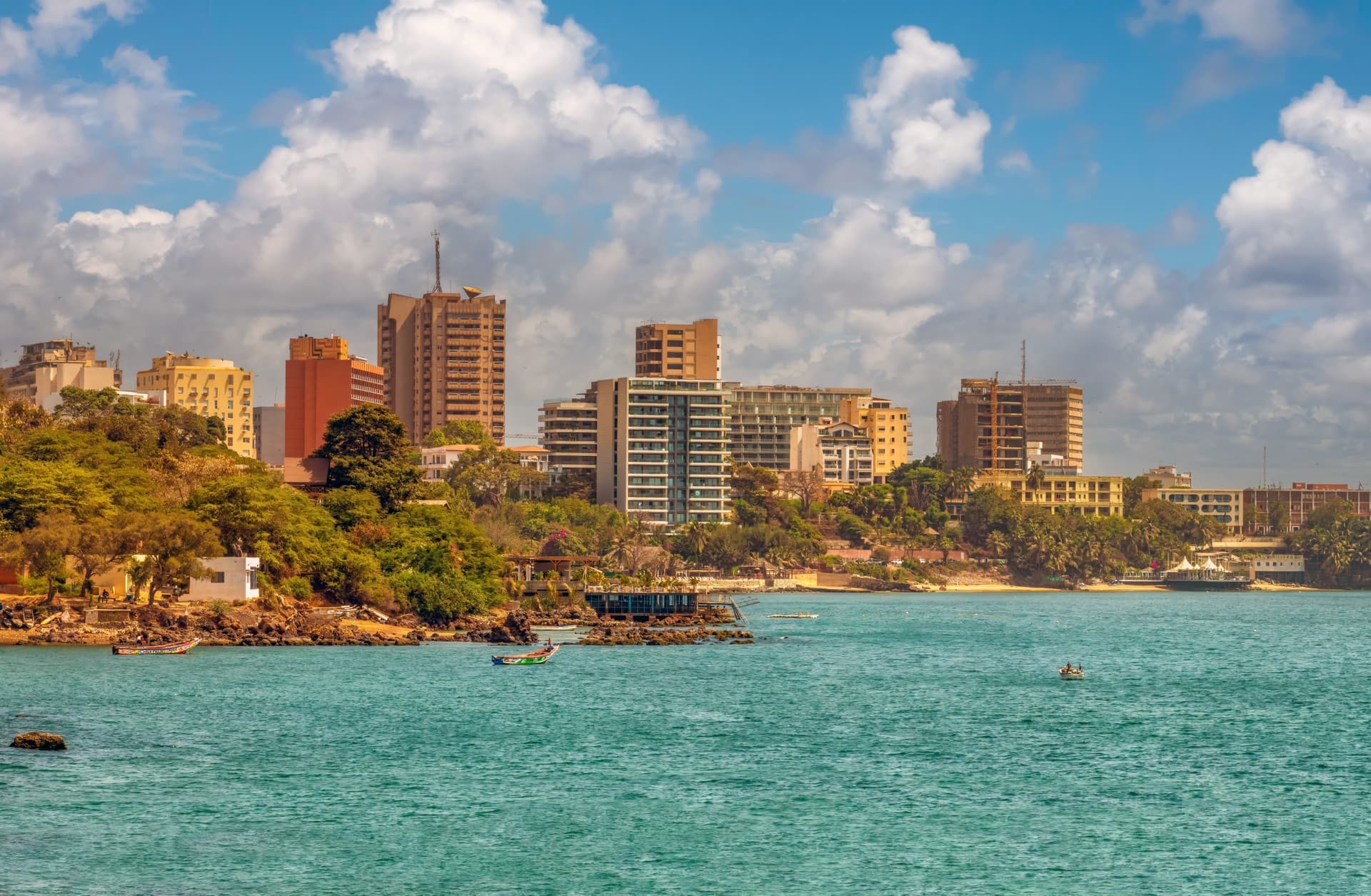
Dakar occupies the western tip of the African continent, on the Cape Verde peninsula. The capital of Sénégal, it concentrates within a compact space a historic medina, bustling markets, a globally recognized art scene and an ever-present ocean frontage. The city thrives at an intense rhythm, between terranga — Senegalese hospitality — and constant urban energy.
Quick facts
- Access: Blaise Diagne International Airport (AIBD), approximately 50 km from the city center; shuttles and taxis available.
- City transport: Cars rapides, Dakar Dem Dikk (public buses), taxis and informal motorbike taxis.
- Dress code: Smart casual recommended, cover shoulders and knees in mosques and the medina.
- Suggested duration: 3 to 5 days to cover main neighborhoods and nearby excursions.
- Language: French (official), Wolof (daily language).
- Currency: CFA Franc (XOF).
What to see
Dakar reveals itself neighborhood by neighborhood. The Plateau houses colonial buildings, government ministries and the cathedral. The Medina, founded in 1914, unfolds its dense alleyways around the Grand Mosque. The Sandaga quarter and its markets overflow with fabrics, spices and crafts. Along the Corniche, the sea is everywhere: Yoff beaches, Almadies rocks, sunsets over the Atlantic.
History and context
Dakar becomes capital of French West Africa in 1902, replacing Saint-Louis. Its deep-water port makes it the commercial hub of the region. After independence in 1960, the city establishes itself as an intellectual and cultural center of the continent — Léopold Sédar Senghor, first president and poet, is its symbol. Today, Dakar hosts the Biennial of Contemporary African Art (Dak'Art), one of the world's most important.
Highlights of your visit
Gorée Island
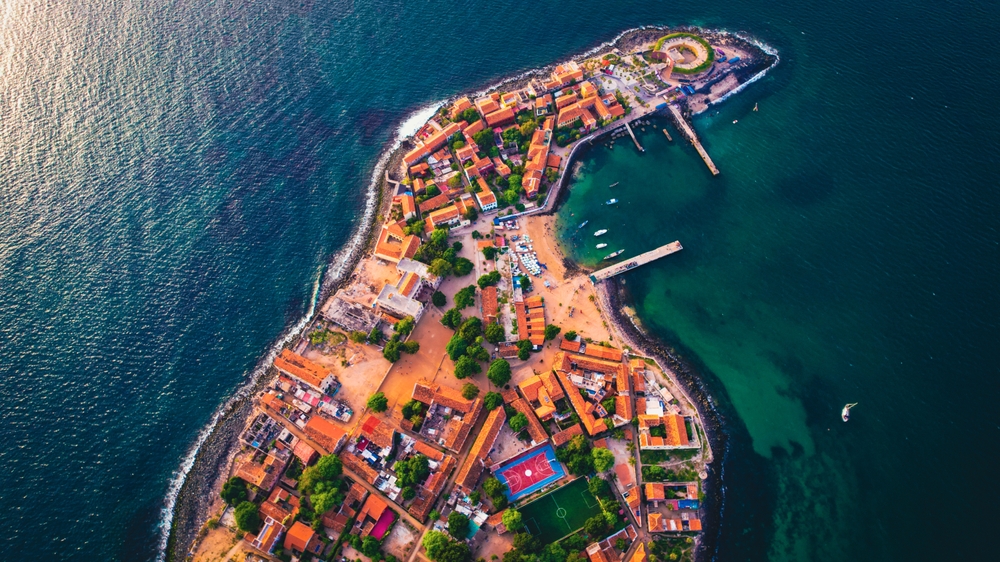
Twenty minutes by ferry from the port, Gorée is listed as a UNESCO World Heritage Site. The House of Slaves and its "Door of No Return" constitute an essential place of memory on the slave trade. The colorful alleyways and absence of cars make it a unique space.
The African Renaissance Monument
This 49-meter bronze statue dominates Mamelles Hill, visible from much of the city. Inaugurated in 2010, it represents a family facing toward the future. The observation platform at the summit offers panoramic views of Dakar and the ocean.
Sandaga market and HLM market
Sandaga, at the heart of the Plateau, is the historic central market. The HLM market, further north, is the reference for wax fabrics, bazin and custom-made clothing. Both deserve a morning each.
The Village of Arts and cultural scene
The Village of Arts, on the Corniche road, brings together studios of Senegalese visual artists. Galleries in the Plateau and Mermoz quarters complete a rich artistic offering, particularly active during the Dak'Art Biennial.
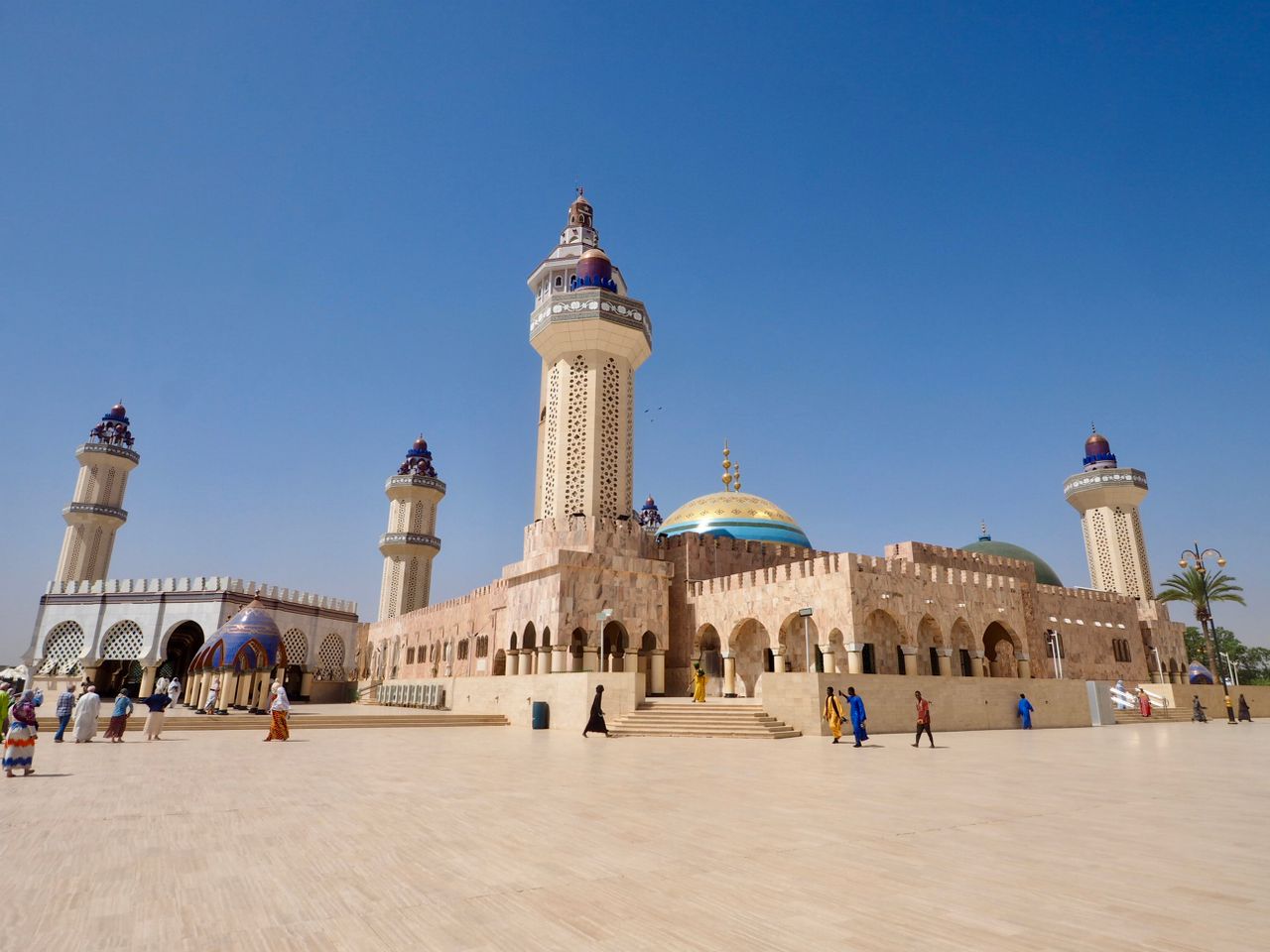
The Grand Mosque of Dakar
Built in 1964 with Moroccan support, it stands at the entrance to the Medina. Its 67-meter minaret is a visual landmark of the city. Non-Muslims may visit it outside prayer times, with appropriate dress.
Etiquette and visiting rules
- In mosques: remove your shoes, cover yourself (women: head, shoulders, legs).
- Avoid photographing people without explicit consent, especially in markets.
- On Fridays at midday, traffic is reduced around mosques during prayer.
- Ramadan changes opening hours of many shops and restaurants.
Photography tips
Golden light in late afternoon is ideal on the West Corniche and at Gorée. Sandaga market is most photogenic early in the morning, before crowds arrive. For the Renaissance Monument, morning backlighting from the east gives relief to the statue. Always ask permission before photographing locals.
Location and access
Dakar occupies the western end of the Cape Verde peninsula. Blaise Diagne Airport is connected to the center by national road and organized shuttles. Dakar port provides maritime links to Gorée Island and to Ziguinchor (Casamance) by ferry. In the city, Dakar Dem Dikk buses cover main routes; taxis are negotiated per journey.
Nearby
- Gorée Island — UNESCO site 20 minutes by ferry, essential for understanding the history of the Atlantic slave trade.
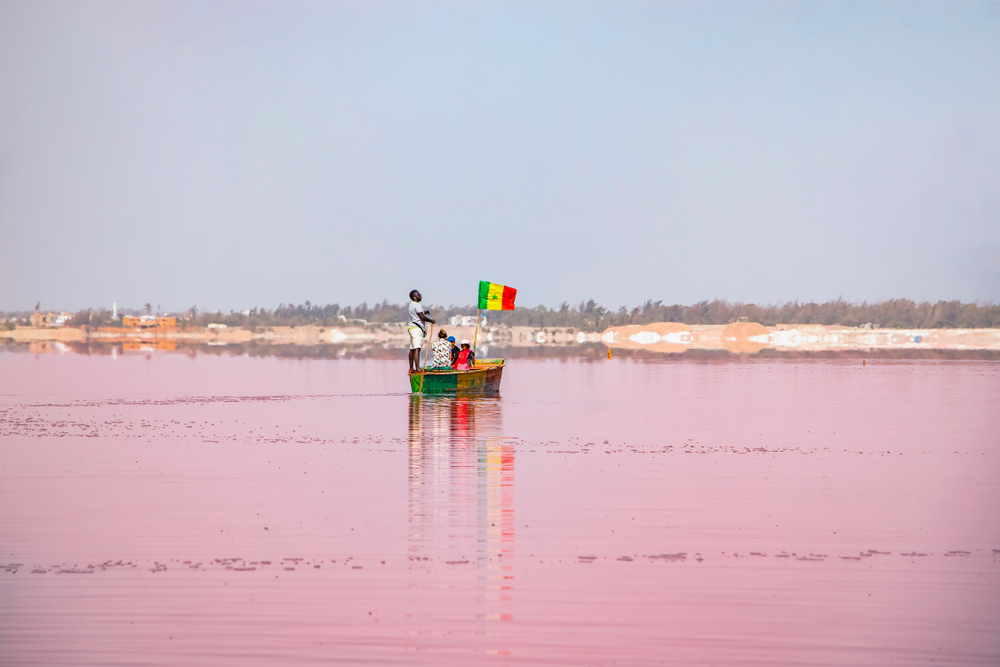
- Lake Rose (Lac Retba) — Lake with pink waters due to a halophile algae, approximately 35 km northeast of Dakar.
- Bandia Reserve — Wildlife reserve approximately 65 km from Dakar, accessible as a day trip.
- Saint-Louis — Former colonial capital listed by UNESCO, approximately 260 km north, ideal for a 2-day stay.
- Saly — Beach resort on the Petite Côte, approximately 80 km south, for beaches and relaxation.
Frequently asked questions
The dry season, from November to May, offers the most pleasant conditions: moderate heat, clear skies, no rain. June to October is the rainy season, with rain and high humidity, but often lower rates.
The ferry departs from Dakar port (Maritime Station dock). The crossing takes approximately 20 minutes. Departures are assured several times a day; it is recommended to arrive early in the morning to avoid weekend crowds.
Dakar is generally safe for tourists. Standard precautions apply: avoid displaying valuables, remain vigilant in crowded markets, prefer official taxis at night.
Thiéboudienne (fish and rice) is the national dish. Yassa chicken (chicken marinated in onions and lemon) and mafé (peanut butter stew) are also unmissable. Restaurants on the Corniche and Plateau also offer varied international cuisine.
Three days allow you to cover main neighborhoods, Gorée and a market. Five days provide time to add Lake Rose and an excursion to the Petite Côte.
Yes, non-Muslims are generally admitted outside prayer times. Dress covering shoulders, arms and legs is required; women must cover their heads. Removal of shoes is required at the entrance.
Attractions in Dakar
Maison des Esclaves
Sur l'île de Gorée, la Maison des Esclaves conserve cellules, porte du voyage sans retour et musée dédiés à la mémoire de la traite négrière atlantique. Un site classé UNESCO, à 20 minutes de Dakar en ferry.
Lac Rose (Lac Retba)
À 40 km de Dakar, le Lac Rose doit sa teinte unique à une salinité extrême et à une microalgue pigmentée. Baignade flottante, extracteurs de sel au travail et dunes face à l'Atlantique.
Île de Gorée
À 20 minutes de Dakar en ferry, l'île de Gorée est un site UNESCO sans voitures, marqué par l'histoire de la traite négrière.
Want to discover this destination?
Our local advisors design your tailor-made trip.