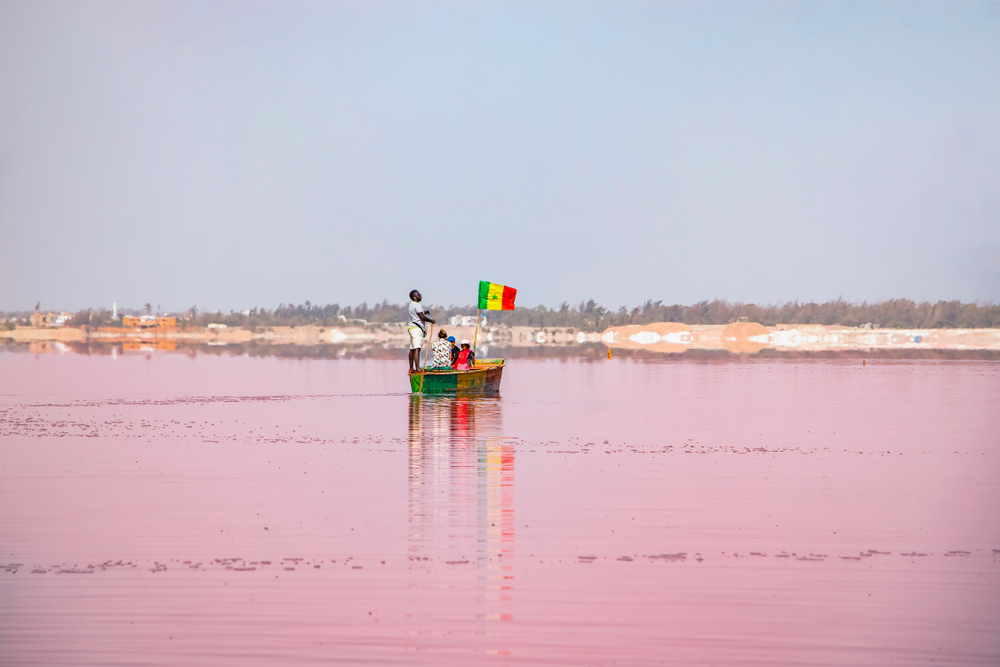
Langue de Barbarie National Park
A slender strip of sand between the Senegal River and the Atlantic Ocean, Langue de Barbarie shelters pelicans, sea turtles, and migratory birds. An exceptional natural site just outside Saint-Louis.
Langue de Barbarie is a thin band of sand stretching south of Saint-Louis, separating the Atlantic Ocean from the mouth of the Senegal River. This national park protects a fragile ecosystem where migratory birds, sea turtles, and pelicans converge. Its position at the confluence of river and ocean makes it one of West Africa's most remarkable ornithological sites.
Practical information at a glance
- Entrance: paid access (entrance fee to the national park managed by Senegal's Directorate of National Parks)
- Access: by pirogue from the Guet Ndar district in Saint-Louis, or by road along the sand strip
- Recommended duration: half-day to full day
- Best period: November to April for migratory birds
- What to wear: hat, sunscreen, and closed-toe shoes recommended — sandy and exposed terrain
What to see
The park is home to one of the region's largest colonies of white pelicans. Herons, cormorants, terns, and flamingos frequent the shores according to the seasons. On the ocean side, beaches serve as nesting grounds for sea turtles, notably the green turtle and leatherback turtle. Vegetation is almost nonexistent: the landscape is simply sand, water, and birds.
History and context
Langue de Barbarie takes its name from Portuguese navigators who christened this coast in the 15th century. The national park was created in 1976 to protect nesting bird colonies and sea turtles. In 2003, an artificial breach was opened in the sand strip to protect Saint-Louis from river flooding — a decision that profoundly altered the site's geomorphology and accelerated coastal erosion.
Highlights of the visit
The pelican colony
Hundreds of white pelicans gather on the sandbars at the river mouth. The pirogue crossing allows you to approach the birds at close range, in the calm of the morning.
The pirogue crossing
The journey from Guet Ndar is an experience in itself: you pass fishing pirogues, observe nets and the sounds of the fish market before entering the park's tranquility.
Sea turtle nesting beaches
Between June and October, sea turtles come ashore on the Atlantic beaches to lay eggs. Local guides organize nighttime outings to observe this phenomenon without disturbing the animals.
Photography tips
Early morning light (before 9 a.m.) is ideal: the low sun brings out reflections on the water and silhouettes of pelicans. Bring a telephoto lens to avoid startling the birds. The breach opened in 2003 offers striking framing between river and ocean. Avoid flash during nighttime turtle outings.
Location and access
The park is located immediately south of Saint-Louis, accessible from the fishing district of Guet Ndar. The pirogue crossing takes just a few minutes. Saint-Louis is connected to Dakar by the national road (approximately 260 km). Local agencies in Saint-Louis offer guided excursions combining the park and the Djoudj ornithological reserve, a UNESCO World Heritage site.
Nearby attractions
- Djoudj Bird National Park — approximately 60 km north of Saint-Louis, one of Africa's premier ornithological sites, inscribed by UNESCO.
- Saint-Louis Island — historic center classified as a UNESCO World Heritage site, a few minutes by car or on foot from Guet Ndar.
- Hydrobase — former Aéropostale seaplane base, today a peaceful residential neighborhood by the river.
Frequently asked questions
From November to April, migratory birds are present in large numbers. For sea turtles, nighttime outings take place between June and October.
The most common route is by pirogue from the Guet Ndar district. Local guides and Saint-Louis agencies organize transfers and tours.
Yes, several agencies offer combined circuits over one or two days. The two sites are complementary: Langue de Barbarie for pirogues and pelicans, Djoudj for bird diversity.
Photography is permitted in the park. During nighttime turtle outings, flash is prohibited to avoid disorientating the animals.
The pirogue crossing and bird watching are suitable for children of a certain age. Bring adequate sun protection and plenty of water — the site is very exposed.
Interested in this visit?
We can include it in your personalised itinerary.