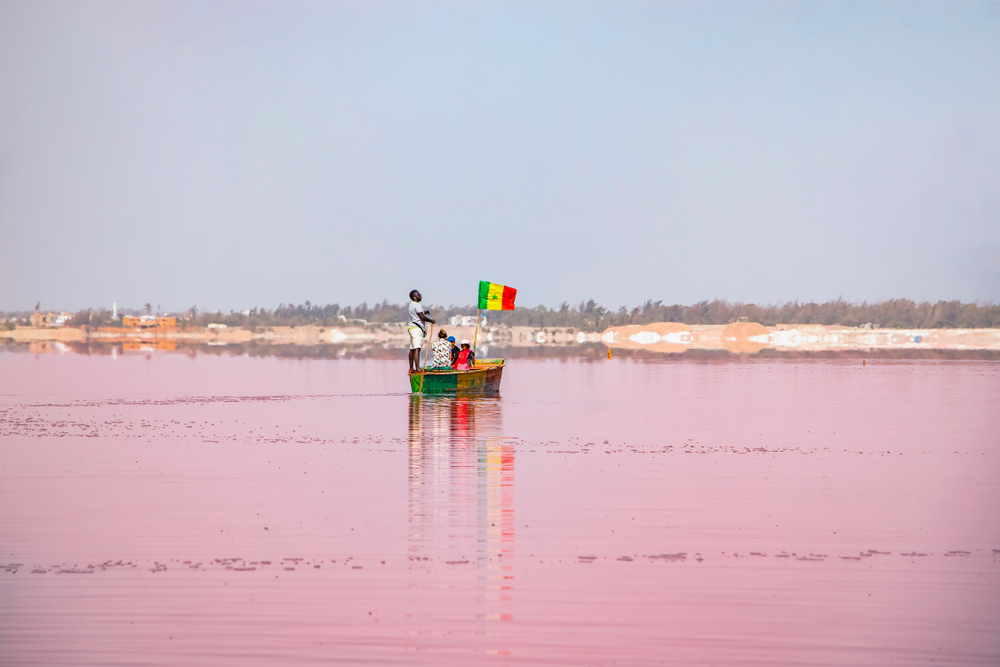
Djoudj National Bird Park
Sixty kilometers from Saint-Louis, Djoudj National Bird Park is a UNESCO and Ramsar site that welcomes millions of migratory birds. White pelicans, pink flamingos and sunrise pirogue excursions make it one of West Africa's premier ornithological destinations.
About fifty kilometers north of Saint-Louis, Djoudj National Bird Park spans the Sénégal river delta, on the Mauritanian border. Designated a UNESCO World Heritage Site and Ramsar wetland, it welcomes several million migratory birds annually from Europe and Central Asia each year. It ranks among West Africa's foremost ornithological refuges, renowned for its colonies of white pelicans and cormorants.
Quick Reference
- Entrance : paid entry (park access fee + mandatory guide for pirogue circuits)
- Access : car or 4×4 from Saint-Louis via the Ross-Béthio road; track accessible in dry season
- Best time : November to April, peak migration December to February
- Recommended duration : half-day to full day depending on chosen circuit
- Clothing : light or neutral-colored clothing, wide-brimmed hat, sun protection; avoid bright colors that startle birds
- Accessibility for mobility-impaired visitors : limited — main circuits are by pirogue on natural channels
What You'll See
The park covers approximately 16,000 hectares of wetlands: lakes, creeks, mudflats and gallery forests. Avian fauna is the site's centerpiece. You'll observe tens of thousands of white pelicans, pink flamingos, African spoonbills, egrets, goliath herons and numerous shorebirds. Mammals—warthogs, green monkeys, otters—are present but elusive.
History and Context
Created in 1971, Djoudj was inscribed on the UNESCO World Heritage List in 1981. It also appears on the register of internationally important wetlands (Ramsar Convention). The park faced a critical period in the 1980s with an invasion of water hyacinth, an invasive plant threatening ecosystems; eradication programs successfully restored habitats.
Visit Highlights
The sunrise pirogue excursion
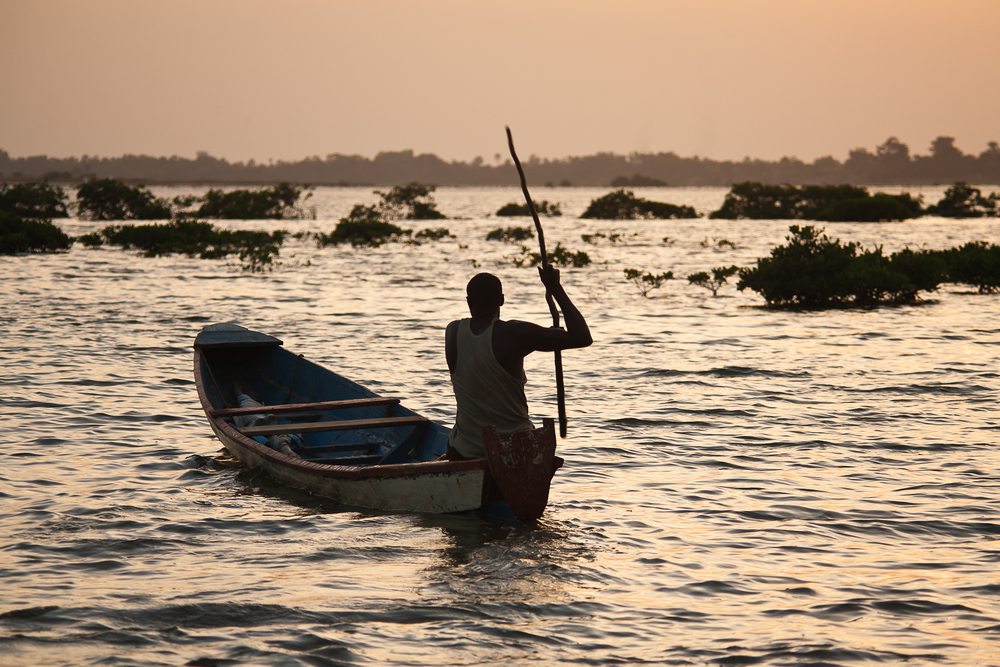
This is the signature experience. Motorized or paddle pirogues glide between reeds at dawn, when white pelican colonies awaken. The sounds, smells and raking light create a sensory experience rarely matched elsewhere in West Africa.
The great white pelican colony
Djoudj hosts one of the continent's largest breeding colonies of white pelicans (Pelecanus onocrotalus). During breeding season, nests are visible from the pirogue, with chicks and adults in breeding plumage.
The bird lake
This central water body concentrates the majority of species. Pink flamingos, spoonbills and pintails converge here. A fixed observation post allows you to scan the shoreline without disturbing the birds.
Photography Tips
Light is optimal in the first hour after sunrise: warm tones, light mist on water, active birds. Use a telephoto lens (300 mm minimum) for pelican portraits without too close an approach. Flash is prohibited in the park. From the pirogue, stabilize your camera on a sandbag or monopod to compensate for engine vibration.
Location and Access
The park lies in the Saint-Louis region, approximately 60 km north of the city via RN2 then a track toward Ross-Béthio. A 4×4 is recommended outside the dry season. No direct public transport exists; most visitors arrive through a local agency or private vehicle from Saint-Louis. Accredited guides from the National Parks Directorate are available at the park entrance.
Nearby Attractions
- Saint-Louis — UNESCO-listed colonial city, the natural starting point for visiting Djoudj.
- Langue de Barbarie National Park — marine turtle and tern reserve on the southern edge of Saint-Louis.
- Richard-Toll — sugar industry town on the Sénégal river, with ruins of Baron Roger's castle.
Frequently asked questions
From November to April, with a peak between December and February. This is when migrations reach their maximum and pelican colonies are most active.
During high season (January-February), it's advisable to contact a local agency in Saint-Louis to organize transport and guide. Direct access without reservation is possible, but pirogues may fill up early in the morning.
No. An accredited guide is mandatory for pirogue circuits inside the park. This rule protects breeding colonies and guides visitors to authorized zones.
Light clothing in neutral colors (beige, khaki, white), a wide-brimmed hat and sunscreen. The pirogue offers little shade and the sun is intense from 9 a.m. onward.
Yes, by leaving Saint-Louis very early (before 6 a.m.). The pirogue excursion lasts about two to three hours; you can be back in town by early afternoon to explore Saint-Louis island.
Yes, the pirogue is accessible to accompanied children. Bring life jackets for younger children and confirm their availability with the guide before departure.
Interested in this visit?
We can include it in your personalised itinerary.